
How to Get Dog Hair Off a Couch: Methods for Every Fabric
The right method depends on the upholstery. Here is what works on fabric, microfiber, leather, and velvet.
 By Camille Rourke
Updated October 9, 2026
The fastest way to get dog hair off a couch depends on what the couch is made of. A rubber glove that works well on a woven fabric sofa does very little on leather, and a tool that is fine on a tough polyester weave can mark velvet. This guide covers the methods that work, which fabrics each one suits, and how to keep the hair from building up again.
Our advice here is research-based. We have compared upholstery care guidance, manufacturer instructions, and what owners of shedding dogs report, rather than running our own lab tests.
First, check the care tag
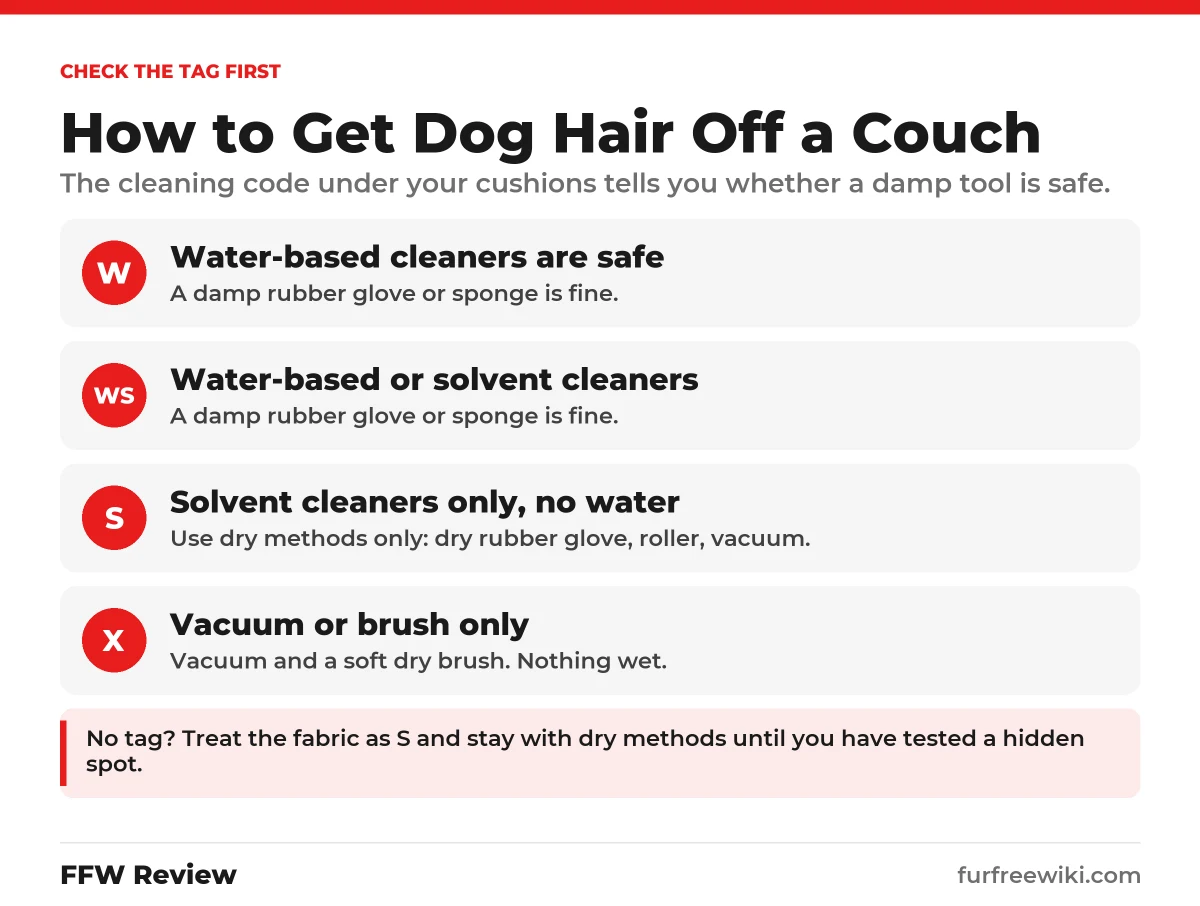
Most sofas have a cleaning code on a tag under the seat cushions or on the underside of the frame. It tells you whether moisture is safe.
| Code | Meaning | For hair removal |
|---|---|---|
| W | Water-based cleaners are safe | Damp glove or damp sponge is fine |
| WS | Water-based or solvent cleaners | Damp glove or damp sponge is fine |
| S | Solvent cleaners only, no water | Use dry methods only |
| X | Vacuum or brush only | Vacuum and a soft dry brush only |
If there is no tag, treat the fabric as S and stick to dry methods until you have tested a hidden spot.
Method 1: Vacuum with an upholstery tool
Start here on any couch. Remove the seat and back cushions, then vacuum the deck underneath, the crevices along the arms and back, and each cushion on all sides. Use the upholstery attachment or a soft brush head, and work in short overlapping strokes. Vacuuming removes loose hair and grit, but it usually leaves behind the hairs woven into the fabric, which is where the next methods come in.
Method 2: Rubber glove
Put on a rubber dish glove and sweep your hand across the fabric in one direction. The friction builds a little static and rolls hair into clumps you can lift off by hand. On W and WS fabrics, dampening the glove slightly makes it more effective. On S and X fabrics, use it dry. This is the cheapest method, and the one that reaches piping, tufting, and the corners of cushions best.
Method 3: Squeegee or rubber brush
A window squeegee or rubber-bristled brush does the same job as a glove over a wider area. Pull it toward you in short strokes and collect the line of hair it leaves. It works best on flat, tightly woven fabric and on microfiber. Go gently on loose weaves, where a hard edge can snag threads.
Method 4: Reusable pet hair roller
Reusable rollers, the type with a fabric-covered drum and a built-in hair chamber, are designed for exactly this job. You push the roller back and forth in short strokes and it traps hair inside, with no adhesive sheets to replace. They work on taut, flat surfaces such as seat cushions and couch arms. They are less effective on loose throws and blankets, because the fabric needs some tension for the mechanism to work.
Method 5: Lint roller for touch-ups
A sticky lint roller is the right tool for a quick pass before guests arrive, and for hair on throw pillows. It is slow and wasteful for a whole sofa, so use it as a finisher.
Method 6: Tumble removable covers before washing
If your cushion covers or slipcover come off and the care label allows machine drying, run them in the dryer on a no-heat or air-only cycle for about ten minutes before you wash them. Tumbling loosens hair and sends much of it to the lint trap. Clean the lint trap afterward, then wash as the label directs. Putting hairy covers straight in the washer tends to leave wet clumps stuck to the fabric and the drum.
Best method by couch material
| Material | What works | What to avoid |
|---|---|---|
| Woven fabric (polyester, cotton blends) | Vacuum, rubber glove, reusable roller | Abrasive stones, which can pill the weave |
| Microfiber | Rubber glove or squeegee, then vacuum | Too much water, which can leave marks on some microfiber |
| Leather and faux leather | Vacuum with a soft brush, then a slightly damp microfiber cloth | Rubber tools dragged hard, sticky rollers left pressed on, anything abrasive |
| Velvet and chenille | Soft clothes brush in the direction of the nap, low-suction vacuum | Scrubbing against the nap, hard-edged tools |
| Linen and loose weaves | Vacuum with brush head, light pass with a lint roller | Squeegees and stiff brushes that catch threads |
Leather is the easiest surface to clear because hair cannot weave into it. Most of what you find will be in the seams and the gap behind the cushions, so that is where to aim the crevice tool.
How to keep dog hair off the couch
- Use a washable cover or throw on your dog’s usual spot. Washing a cover weekly is far less work than cleaning the upholstery.
- Brush your dog regularly, outdoors if you can. Hair that comes out in the brush never reaches the sofa.
- Do a two-minute pass every few days with a glove or roller. Hair that sits gets pressed deeper into the fabric each time someone sits down.
- Give your dog a bed of their own near the couch, so the sofa is not the only comfortable option in the room.
Frequently asked questions
What is the quickest way to get dog hair off a couch?
On a fabric couch, a rubber glove or a reusable pet hair roller is quickest for the surface, followed by a vacuum for the crevices. On leather, a vacuum with a soft brush does almost all of it.
Do dryer sheets remove dog hair from furniture?
Wiping with a dryer sheet can reduce static and pick up some loose hair, but it leaves softener residue on the fabric and does little for embedded hair. A rubber glove does the same job without the residue.
Can I use a pumice-style pet hair stone on my couch?
We would not. Those stones are made for carpet and can pill, snag, or scuff upholstery. Keep them for rugs and car carpet.
Why does dog hair stick to my couch so much?
Two reasons: static, which holds hair against synthetic fabrics, and texture. Stiff, short hairs work into woven fabric like splinters. Tightly woven or smooth materials release hair much more easily than loose, textured ones.
About the author
Camille Rourke writes the how-to guides and head-to-head comparisons at FFW Review. Camille turns our product research into step-by-step cleaning advice and X vs Y breakdowns that link back to the picks behind them.