
Best Deshedding Brushes for Cats: 3 Tools for Short and Long Coats
The right cat brush depends on the coat and on what your cat will put up with. Here are three tools and how to use each without a fight.
 By Hazel Brandt
Updated October 9, 2026
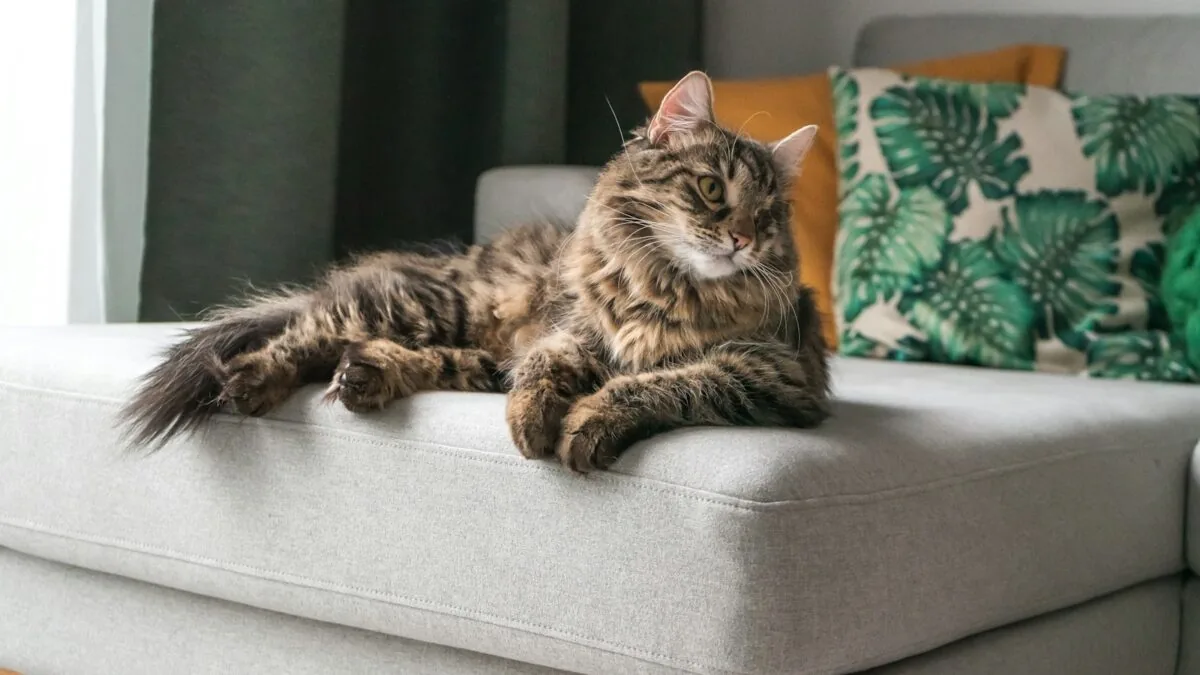
Cats groom themselves constantly, and every loose hair they do not swallow ends up on your furniture. Brushing removes that hair first. It reduces what lands on the couch, and it reduces how much your cat swallows, which matters for hairballs.
The complication is the cat. A dog will usually stand for a brush. A cat decides for itself, and a tool that is too scratchy or a session that goes on too long can end brushing for good. So this guide weighs gentleness as heavily as hair removal.
This guide is research-based. We compared design, manufacturer guidance, independent reviews, and patterns in verified owner feedback. We have not run our own side-by-side trials, and where owner reports are mixed, we say so. Read more on our How We Test page.
Our picks at a glance
- Best for dense short coats: FURminator Short Hair deShedding Tool for Cats.
- Best for long and medium coats: Hertzko Self-Cleaning Slicker Brush.
- Best for cats that dislike brushes: HandsOn Pet Grooming Gloves.
| Award | Product | FFW Score About FFW ScoreThe FFW Score is our own rating from 0 to 10, based on performance, design and build, ease of use, and value. It reflects independent research and is never influenced by manufacturers, retailers, or affiliate commissions. Learn more › | |
|---|---|---|---|
| FURminator Short Hair deShedding Tool for Cats | 7.0/10 | Buy | |
| Best Overall |
 Hertzko Self-Cleaning Slicker Brush |
8.6/10 | Buy |
| Best Value |
 in-depth Pet Grooming Gloves 2-Pair (S & M) |
8.1/10 | Buy |
FURminator Short Hair deShedding Tool for Cats
A deshedding tool with a fine stainless steel edge that reaches through the topcoat to pull out loose undercoat, sized for short-haired cats up to 10 pounds. A button pushes collected hair off the edge. Use light strokes and limit sessions, since overuse can irritate skin.
Pros
- Removes a lot of loose undercoat quickly
- Button releases collected hair
- Sized for small cats
- Comfortable handle
Cons
- Easy to overdo, so keep sessions short and gentle
- Not for cats with no undercoat or with skin problems
- Sizes and coat lengths are separate products, so check before buying
Hertzko Self-Cleaning Slicker Brush
A well-rounded grooming brush for both dogs and cats, the Hertzko Slicker stands out for its push-button retractable bristles that make post-groom cleanup genuinely quick. Angled fine bristles handle detangling and shedding control across short and long coat types, while an ergonomic grip keeps hand fatigue low during longer sessions. With over 91,000 ratings averaging 4.5 stars, it has earned a strong reputation among everyday pet owners.
Pros
- Push-button bristle retraction makes removing collected fur fast and hassle-free
- Fine angled bristles work across both short and long coats for versatile use
- Comfort grip handle reduces hand strain during extended grooming sessions
- Soft bristles are gentle enough not to scratch sensitive skin
- Exceptionally high review volume with a strong 4.5-star average signals broad, consistent satisfaction
Cons
- At 5.8 x 3 x 10 inches, the brush may feel bulky for grooming small cats or toy breeds
- Fine bristles suited for detangling may not deliver the deeper undercoat removal that heavy-shedding double-coat breeds require
in-depth Pet Grooming Gloves 2-Pair (S & M)
Designed for pet owners who want grooming and bathing in one tool, these rubber-nodule gloves work across cats, dogs, and horses with short to coarse fur. The 2-pair kit includes both S and M sizes, and the adjustable fit means both hands stay covered during full baths or dry deshedding sessions. Best suited for households with multiple pets or mixed fur types.
Pros
- Works for bathing, deshedding, and massaging without switching tools
- Rubber nodules stimulate circulation and help distribute natural oils during grooming
- Machine washable and easy to clean by simply rubbing gloves together
- Includes two size options (S and M) in one package, useful for different hand sizes or pet sizes
- Flexible and adjustable fit accommodates most hand shapes
Cons
- Rubber construction may retain odors over time with heavy use
- Oblong glove shape may feel awkward for users with larger hands even at medium size
Match the tool to the coat
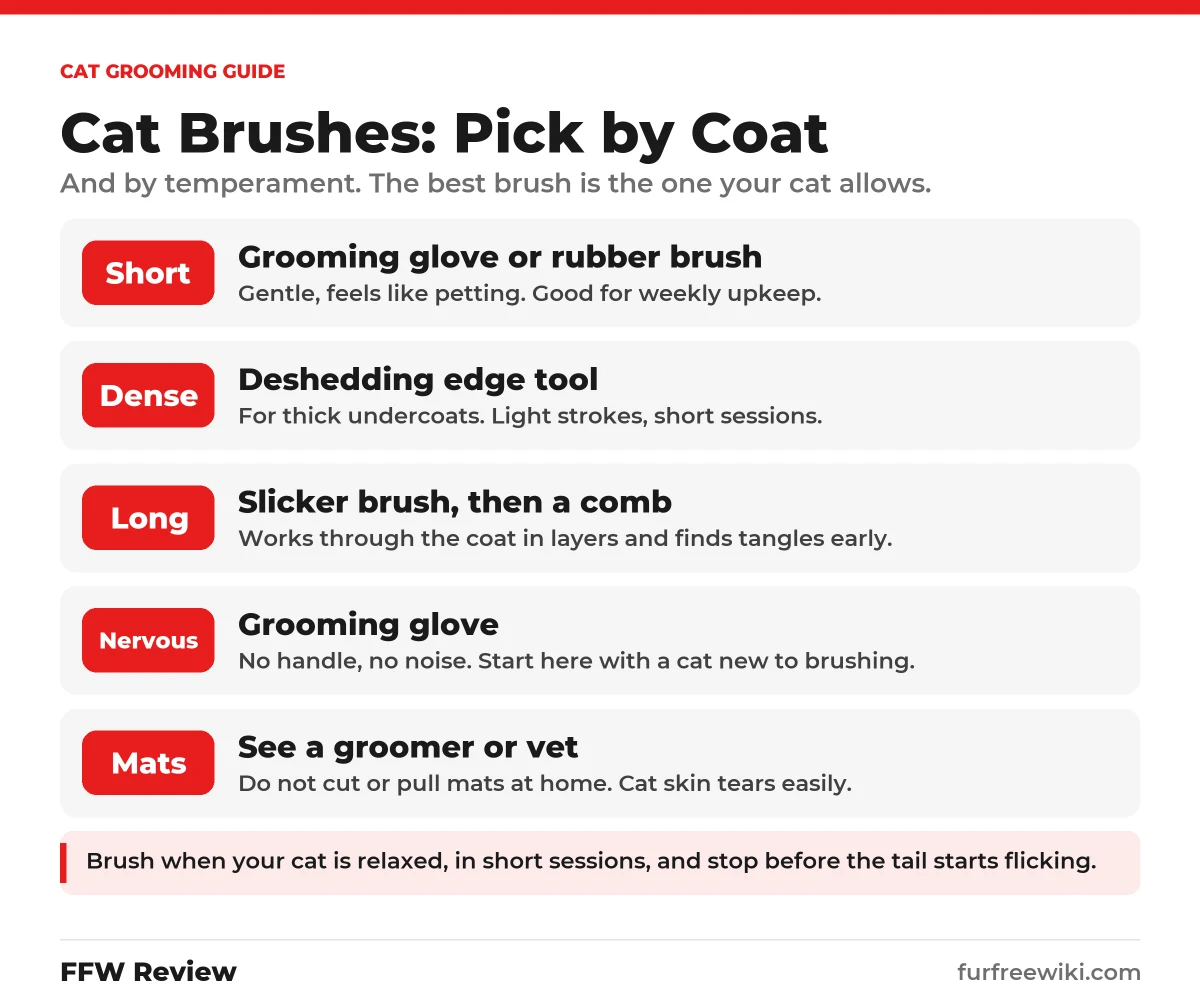
| Coat | Examples | Tool | How often |
|---|---|---|---|
| Short, sleek, little undercoat | Siamese, Bengal, many domestic shorthairs | Grooming glove or rubber brush | Weekly |
| Short and dense, plush undercoat | British Shorthair, Russian Blue, plush domestic shorthairs | Deshedding tool, used lightly | Weekly, more in spring and fall |
| Medium to long | Maine Coon, Ragdoll, Norwegian Forest Cat, domestic longhairs | Slicker brush, followed by a wide-tooth comb | Several times a week |
| Very long, fine | Persian, Himalayan | Comb first, soft slicker second | Daily |
The three tools
FURminator Short Hair deShedding Tool for Cats
A fine metal edge reaches through the topcoat and pulls out loose undercoat. On a dense-coated cat it removes a striking amount of hair in a few strokes. That power is also the risk. Use light pressure, stroke in the direction of growth, and keep sessions to a few minutes. It is not for cats without an undercoat or with irritated skin. FURminator sells separate versions for long hair and for larger cats, so check the size before ordering.
Hertzko Self-Cleaning Slicker Brush
Fine bent wire pins lift loose hair from longer coats and tease out small tangles before they become mats. A button retracts the pins so the hair falls off in a sheet. Brush gently: the pins can scratch if pressed into the skin. Sold for dogs and cats.
HandsOn Pet Grooming Gloves
Rubber nubs on the palm and fingers collect loose hair while you stroke your cat. To the cat it feels like petting, which makes gloves the best starting point for kittens, seniors, and cats that run from brushes. They remove less undercoat than the other tools. We compare gloves in the best pet hair removal gloves.
How to brush a cat without a fight
- Pick the moment. After a meal or during a sleepy spell, not during play.
- Start where cats like to be touched: cheeks, chin, and along the back.
- Leave the belly, legs, and tail until your cat is comfortable, and skip them if it never is.
- Keep it short. Two to five minutes. Stop at the first sign of irritation: a flicking tail, flattened ears, skin twitching.
- End with a treat.
Mats are a different problem
A mat is a tight knot of hair close to the skin. Do not cut one out with scissors. Cat skin is thin and lifts into the mat, and cuts are a common injury. Small tangles can be worked apart with fingers and a comb. Established mats need a groomer or vet.
When shedding is a health question
Seasonal shedding is normal. See a vet if you notice bald patches, sores, constant scratching, or a sudden change in the coat. Older and overweight cats that cannot reach their backs to groom often need extra brushing.
After the brushing
What lands on the furniture anyway is covered in how to get cat hair off a couch and how to get cat hair off bed sheets. To protect the couch itself, see the best couch covers for cats.
Frequently asked questions
What is the best brush for a shedding cat?
For dense short coats, a deshedding tool used gently. For long coats, a slicker brush and comb. For cats that dislike brushes, a grooming glove.
Is the FURminator safe for cats?
Used as directed, with light strokes and short sessions, on a cat with an undercoat and healthy skin. Overuse can irritate.
How often should I brush my cat?
Short-haired cats about weekly, long-haired cats several times a week to daily, and more often during spring and fall.
Does brushing reduce hairballs?
Removing loose hair means your cat swallows less of it while grooming, which is why vets commonly recommend regular brushing for cats prone to hairballs.
About the author
Hazel Brandt covers shedding control for FFW Review: deshedding tools, brushes, and grooming vacuums. Hazel also writes our shedding guides for heavy-shedding breeds such as Huskies, German Shepherds, and Golden Retrievers.