
How to Get Dog Hair Out of a Car: A Step-by-Step Guide
Loosen the hair with a rubber tool, gather it, then vacuum. Here is the full process for carpet, cloth seats, and leather.
 By Camille Rourke
Updated October 9, 2026
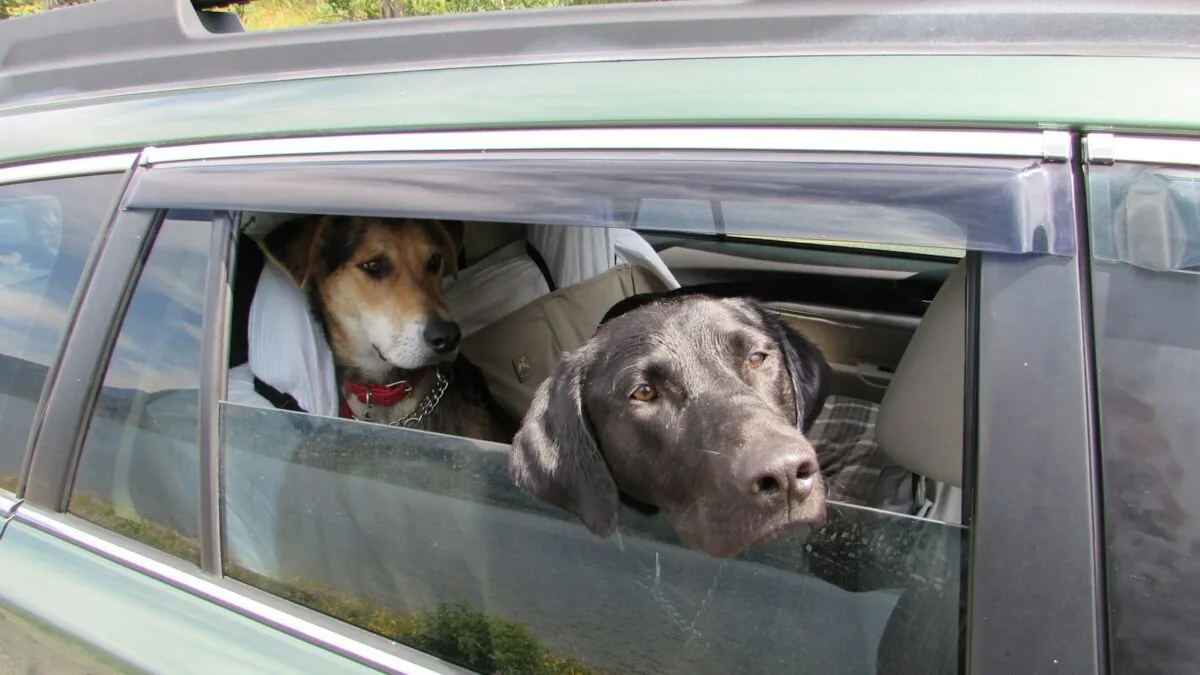
Dog hair is harder to get out of a car than out of a house. Automotive carpet is a short, dense loop pile, and stiff guard hairs work their way into it like tiny needles. A vacuum on its own skims over the top. The method that works is always the same three steps: loosen the hair, gather it into clumps, then vacuum.
This guide walks through that process and the tools for each step, from things you already own to purpose-made removers. It is research-based: we have compared detailer advice, manufacturer care guidance, and owner reports rather than running our own timed tests.
What you need
- Something rubber to loosen and gather hair: a rubber dish glove, a window squeegee, or a rubber pet hair brush.
- A vacuum with a hose, a crevice tool, and ideally a brush attachment. A shop vac or a corded handheld has more pull than most small cordless units.
- A spray bottle of plain water to cut static.
- Optional: a pet hair detailing stone for carpet, and a lint roller for the final pass.
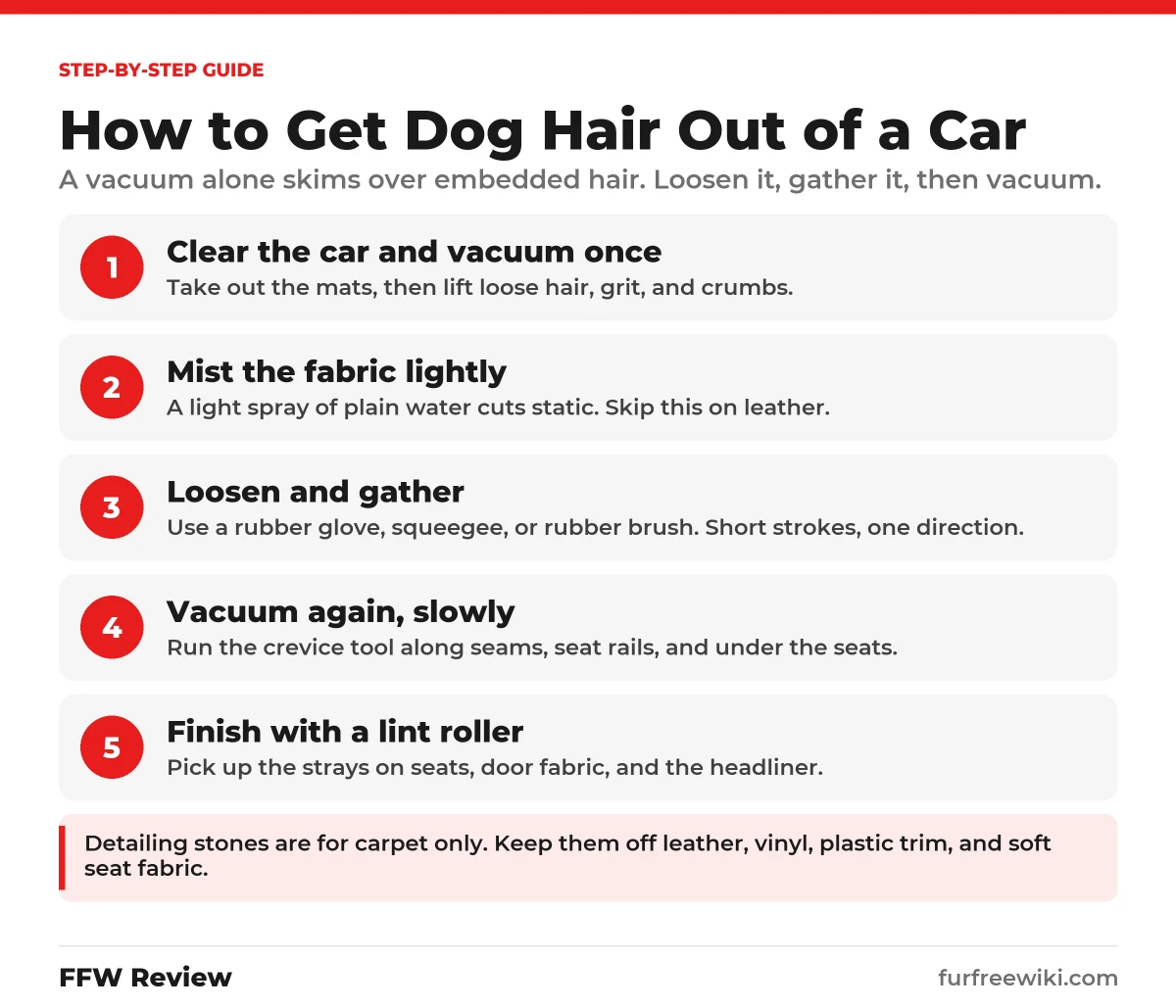
Step 1: Clear the car and do a first vacuum
Take out floor mats, seat covers, blankets, and anything on the floor. Shake the mats out and set them aside to clean separately. Then vacuum every surface once, quickly. This pass will not get the embedded hair. Its job is to remove loose hair, grit, and crumbs so the next step is not just pushing dirt around.
Step 2: Lightly mist the fabric
Static is a big part of why hair clings to car upholstery. A light mist of water over carpet and cloth seats reduces it and helps hair clump. The surface should feel barely damp, not wet. Skip this step on leather and on any electronics or switchgear.
Step 3: Loosen and gather the hair
Pick the tool that suits the surface. With all of them, work in short strokes in one direction, pulling the hair toward you into a line or pile.
Rubber glove (best starting point)
Put on a rubber dish glove, dampen it slightly, and sweep your palm across the seat or carpet. Friction and static roll the hair into clumps you can pick up by hand. It is cheap, it is safe on cloth seats, and your fingers reach seams, seat edges, and the gap around seat rails that rigid tools miss.
Squeegee or rubber brush (large flat areas)
A window squeegee or a rubber-bristled pet hair brush covers cargo floors and seat backs faster than a glove. Drag it firmly toward you. These work well on short carpet and less well on plush or textured seat fabric.
Detailing stone (stubborn carpet only)
Pet hair detailing stones are lightweight, pumice-like blocks that grab hair woven into carpet. They are effective on trunk liners and floor carpet where nothing else gets the last layer out. They are also abrasive. Use light pressure, test on a hidden patch first, and keep them off leather, vinyl, plastic trim, headliners, and delicate seat fabric, where they can scuff or pull threads.
What to use where
| Surface | Use | Avoid |
|---|---|---|
| Floor and trunk carpet | Rubber brush, squeegee, detailing stone | Soaking the carpet |
| Cloth seats | Damp rubber glove, rubber brush, lint roller | Detailing stone on soft or woven fabric |
| Leather and vinyl seats | Vacuum with soft brush, damp microfiber cloth | Anything abrasive, water mist |
| Seams, rails, and crevices | Gloved fingers, crevice tool, a soft detailing brush | Metal picks that can cut stitching |
| Headliner | Lint roller, very light touch | Scrubbing or wetting, which can loosen the adhesive |
Step 4: Vacuum again, slowly
Now that the hair is sitting on top in clumps, vacuum it up. Go slowly and overlap your passes. Use the crevice tool along seat seams, between the seat and center console, under the seats, and around the seat belt anchors. Slide the front seats all the way forward and then all the way back to reach the carpet underneath.
Step 5: Finish with a lint roller
A sticky lint roller or a reusable roller picks up the stray hairs left on seats, door panel fabric, and the headliner. This is a finishing tool. Using it for the whole job burns through sheets quickly.
Do not forget the floor mats
Carpet mats can be cleaned more aggressively than the carpet fixed in the car. Lay them flat on the ground, brush them with a rubber brush or stone, and vacuum. Rubber and all-weather mats only need a rinse and a wipe.
How to keep dog hair out of the car
- Cover the seat or cargo area. A hammock-style seat cover or a cargo liner catches most hair and comes out for washing. This is the single biggest time saver.
- Brush your dog before the ride, outside the car, especially during spring and fall shedding.
- Keep a rubber glove or small brush in the door pocket and do a two-minute sweep each week before hair works its way in.
- Crack a window rather than opening it wide if hair blowing around the cabin is a problem.
Frequently asked questions
Why will my vacuum not pick up dog hair in the car?
The hair is embedded in the carpet loops and held by static, so suction alone cannot pull it free. Loosen it first with a rubber tool, then vacuum.
Is a pumice stone safe for car carpet?
Used lightly, pet hair detailing stones are made for automotive carpet. They can damage leather, vinyl, plastic, and delicate fabric, so keep them to carpeted areas and test a hidden spot first.
Does fabric softener help remove dog hair?
A diluted fabric softener spray is a common tip because it reduces static, but it can leave a residue on upholstery and the scent bothers some dogs. A light mist of plain water gives most of the same benefit without the residue.
How often should I clean dog hair out of the car?
A quick weekly sweep keeps hair from embedding. If your dog rides every day or is shedding heavily, a seat cover you can shake out is easier than cleaning the upholstery itself.
About the author
Camille Rourke writes the how-to guides and head-to-head comparisons at FFW Review. Camille turns our product research into step-by-step cleaning advice and X vs Y breakdowns that link back to the picks behind them.