
How to Reduce Dog Shedding in the House
Shedding is normal, but most of that hair can end up in a brush instead of on your floor. Here is the routine that helps.
 By Hazel Brandt
Updated October 9, 2026

You cannot stop a dog from shedding. Shedding is how a healthy coat renews itself, and every dog with fur does it to some degree. What you can change is where the hair ends up. Most of the hair on your floors and furniture was already loose in the coat for days before it fell out, so the goal is to remove it on your terms, with a brush, before it lands in the house.
This guide covers the routines that make the biggest difference: grooming, bathing, diet, and how you set up your home. It is a guide to tools and habits, not medical advice. We are not veterinarians, and the last section explains when shedding is a reason to call one.
Why dogs shed, and when it is heaviest
Each hair grows, rests, and falls out to make room for a new one. Breed and coat type decide how much hair that adds up to. Double-coated breeds such as Huskies, German Shepherds, Golden Retrievers, and Labradors have a dense undercoat beneath the outer guard hairs, and they typically shed the undercoat heavily twice a year, in spring and fall. Owners call this “blowing coat”. Short single-coated dogs tend to shed lightly but steadily all year. Dogs that live mostly indoors under artificial light often shed more evenly across the year than dogs that spend most of their time outside.
1. Brush more often, with the right tool
Regular brushing is the most effective thing you can do, because every hair in the brush is one that never reaches the carpet. As a general guide:
| Coat type | Examples | Tool | How often |
|---|---|---|---|
| Short, smooth | Beagle, Boxer, Pug | Rubber curry brush or grooming glove | Once or twice a week |
| Double coat | Husky, German Shepherd, Labrador, Golden Retriever | Undercoat rake, then a slicker brush | Two to three times a week, daily during seasonal sheds |
| Long or silky | Collie, Setter, Spaniel | Slicker brush and a wide-tooth comb | Several times a week |
| Curly or wiry, low shedding | Poodle, many terriers | Slicker brush and comb to prevent mats | Several times a week, plus regular trims |
Brush in the direction the hair grows, work in sections, and be gentle over the belly, legs, and tail. Brush outdoors when the weather allows, or on a hard floor that is easy to sweep. A few short sessions a week do more than one long one a month.
2. Bathe on a schedule, and dry thoroughly
A bath loosens a large amount of dead coat at once. Brush before the bath to remove tangles, use a shampoo made for dogs, and rinse completely, since leftover shampoo can irritate skin. The drying step matters as much as the washing. Towel well, and if your dog tolerates it, a pet dryer on a low or cool setting pushes out loose undercoat far better than air drying. Brush again once the coat is dry.
How often to bathe depends on the dog. Every four to eight weeks suits many dogs, and bathing much more often than your vet or groomer suggests can dry out the skin, which makes shedding worse rather than better.
3. Do not shave a double-coated dog
Shaving does not reduce shedding. The dog sheds shorter hairs instead. In double-coated breeds the coat also insulates against both heat and cold and protects the skin from sun, and a shaved double coat can grow back patchy or with a changed texture. A thorough brush-out, or a professional deshedding treatment during a seasonal shed, is the better option.
4. Feed for skin and coat health
Coat condition reflects overall health. A complete and balanced diet that suits your dog’s age and size, and constant access to fresh water, are the foundation. Omega-3 and omega-6 fatty acids play a role in skin and coat health, and many dog foods include them. If you are thinking about adding a fish oil or other supplement, ask your vet first, since the right amount depends on your dog and what they already eat.
5. Keep on top of fleas and skin problems
Fleas, mites, and allergies make dogs scratch, and scratching pulls out hair. Staying current with the parasite prevention your vet recommends removes one of the most common causes of excess hair loss.
6. Set up your home to contain the hair
Grooming reduces the amount of hair. These habits control where the rest goes.
- Cover the favorite spots. Washable covers on the couch, the bed, and the car seat collect hair in one place that goes straight into the wash.
- Wash dog bedding weekly. A dog bed holds a surprising share of the hair in a house. Shake it out outdoors before washing.
- Vacuum the routes your dog uses. Hallways, the area around the dog bed, and the space by the door need attention several times a week during heavy shedding. The rest of the house can wait.
- Run an air purifier where your dog sleeps. A unit with a true HEPA filter and a washable pre-filter captures airborne dander and fine hair. It will not pick up hair that has already settled.
- Choose surfaces that release hair. Smooth, tightly woven fabrics and hard floors are far easier to clear than textured upholstery and deep carpet.
A simple weekly routine
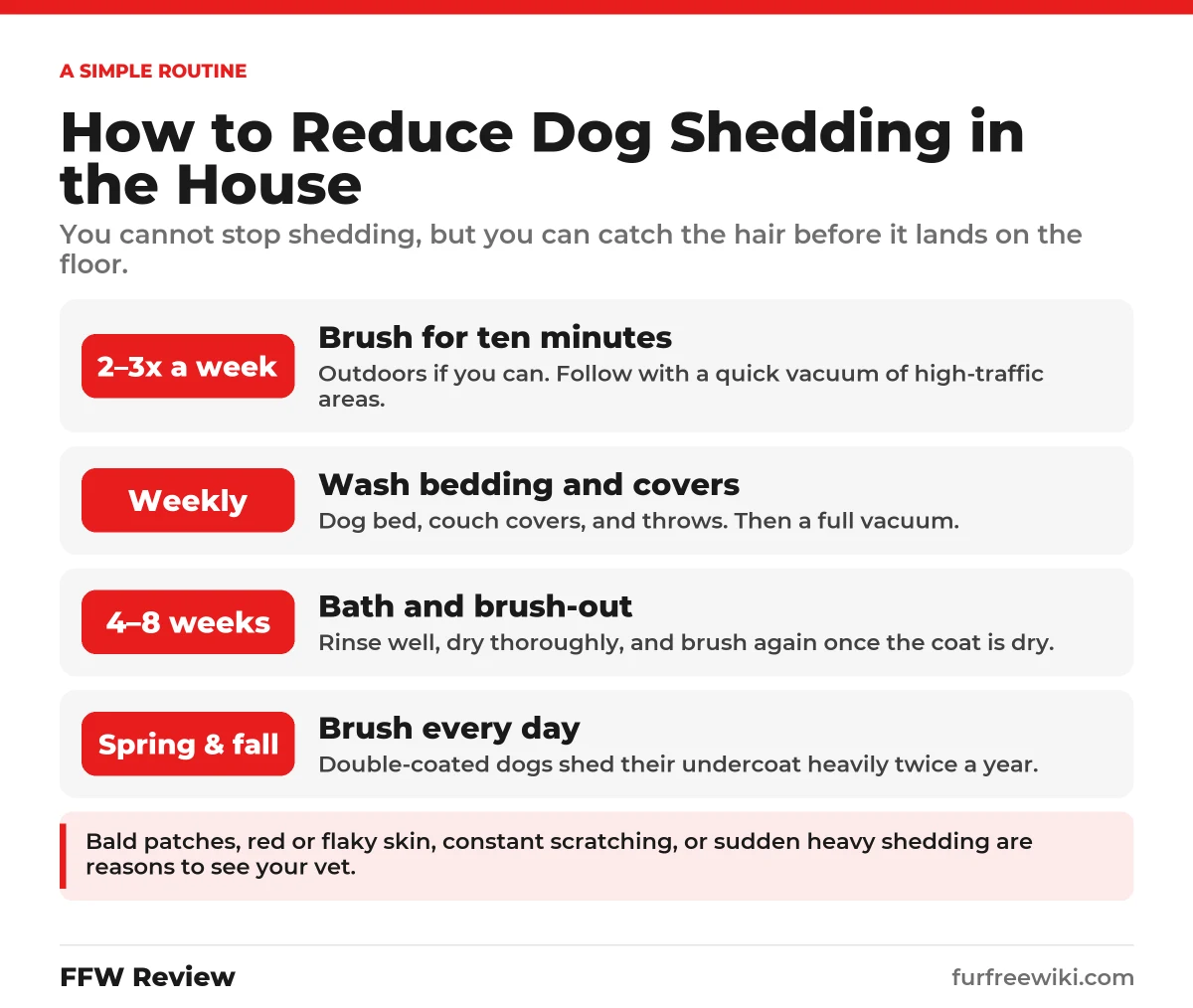
| When | What |
|---|---|
| Two or three times a week | Ten-minute brush, outdoors if possible. Quick vacuum of high-traffic areas. |
| Weekly | Wash dog bedding and furniture covers. Full vacuum. |
| Every four to eight weeks | Bath, thorough dry, and brush-out. |
| Spring and fall | Brush daily while the undercoat is coming out. |
When shedding means a vet visit
Normal shedding is even across the body and leaves healthy skin underneath. Talk to your vet if you notice any of the following:
- Bald patches or clearly thinning areas
- Red, flaky, scabbed, or smelly skin
- Constant scratching, licking, or chewing
- A dull, dry, or brittle coat
- A sudden increase in shedding outside the usual seasons
These can point to allergies, parasites, infections, stress, hormonal conditions, or a diet that is not meeting your dog’s needs, all of which need a diagnosis rather than a new brush.
Frequently asked questions
Can you stop a dog from shedding completely?
No. Shedding is a normal part of coat growth. Regular brushing, bathing, and good nutrition reduce how much loose hair ends up around the house.
How often should I brush a dog that sheds a lot?
Two to three times a week for most heavy shedders, and daily during the spring and fall coat changes.
Does bathing a dog reduce shedding?
Yes, for a while. A bath followed by thorough drying and brushing removes a lot of dead coat in one session. Bathing too often can dry the skin, so follow your vet’s or groomer’s guidance on frequency.
Do any dogs not shed?
All dogs lose some hair. Breeds such as Poodles shed very little because loose hair stays trapped in the curly coat, which is why they need regular brushing and trims to prevent matting.
About the author
Hazel Brandt covers shedding control for FFW Review: deshedding tools, brushes, and grooming vacuums. Hazel also writes our shedding guides for heavy-shedding breeds such as Huskies, German Shepherds, and Golden Retrievers.